
Websites and SEO
What Your Business Actually Needs Before You Build a Website
I have learned that useful business advice should make the next decision clearer, not make the reader feel behind. This guide breaks what your business actually needs before you build a website into practical choices you can test against your own audience, budget, skills, and obligations. Treat examples as starting points rather than promises.
A website needs a job
A website cannot compensate for an unclear business. Decide what a useful visit should produce: a booked consultation, a product purchase, an email signup, a quote request, or a visit to a physical location. One primary goal gives the page hierarchy, copy, and navigation a reason to exist.
For this step, write down what you know, what you are assuming, and the smallest action that would give you better evidence. Set a specific deadline. A useful test might be five customer conversations, one simple landing page, a manual pilot, or an audit of the assets you already own. Keep the result even when it is disappointing; evidence saves more time than optimistic guessing.
Define the offer and customer
Name the result, delivery method, boundaries, price range, and person who benefits. Collect the exact questions customers ask before buying. Those questions become your service-page headings, FAQ, calls to action, and content plan. Clear customer language usually converts better than clever brand language.
For this step, write down what you know, what you are assuming, and the smallest action that would give you better evidence. Set a specific deadline. A useful test might be five customer conversations, one simple landing page, a manual pilot, or an audit of the assets you already own. Keep the result even when it is disappointing; evidence saves more time than optimistic guessing.
Gather practical brand basics
You need a readable logo, a restrained palette, usable type choices, a consistent voice, and a few strong images. You do not need a fifty-page manual. Dani Mac Studio can turn these basics into a professional design system when you are ready for a site that supports real business goals.
For this step, write down what you know, what you are assuming, and the smallest action that would give you better evidence. Set a specific deadline. A useful test might be five customer conversations, one simple landing page, a manual pilot, or an audit of the assets you already own. Keep the result even when it is disappointing; evidence saves more time than optimistic guessing.
Own the infrastructure
Register a domain in your name, use professional email, and keep account recovery information current. Dani Mac Host explains domains, hosting, and email without hiding ownership behind a designer’s account. Store credentials in a password manager and document renewal dates.
For this step, write down what you know, what you are assuming, and the smallest action that would give you better evidence. Set a specific deadline. A useful test might be five customer conversations, one simple landing page, a manual pilot, or an audit of the assets you already own. Keep the result even when it is disappointing; evidence saves more time than optimistic guessing.
Prepare content and a contact process
Draft the home, about, offer, proof, FAQ, privacy, and contact content before design begins. Decide who answers inquiries, how quickly, what information the form should collect, and what happens next. A confident call to action names the next step and sets an honest expectation.
For this step, write down what you know, what you are assuming, and the smallest action that would give you better evidence. Set a specific deadline. A useful test might be five customer conversations, one simple landing page, a manual pilot, or an audit of the assets you already own. Keep the result even when it is disappointing; evidence saves more time than optimistic guessing.
A simple action plan
- Choose the one decision that would make the rest easier.
- List the evidence you have and the assumptions you are making.
- Run a small, ethical test with a clear success measure.
- Document what happened and improve one variable.
- Check legal, tax, privacy, accessibility, or licensing requirements that apply to your exact business.
Frequently asked questions
Do I need to do all of this at once?
No. Sequence matters more than volume. Start with the step closest to a real customer decision and build the supporting system after you understand what the business needs.
How do I know when the work is good enough?
Define a standard before you begin: accurate, usable, accessible, consistent, and ready for a real person to try. Good enough for a test is not the same as careless. It means you are intentionally delaying polish that depends on evidence you do not have yet.
Conclusion
The goal is not to look busy. It is to make a sound decision, complete the useful work, and learn from a real response. If you need the next layer of support, explore the tools and services at danimac.studio. Use the resource that fits the problem instead of adding another subscription by default.
Keep building with intention.
Explore the practical tools, services, and systems across the Dani Mac ecosystem when you need the next layer of support.
Explore resources →Related reading
Domain, Hosting, and Professional Email Explained Without the Tech Jargon
Understand domains, web hosting, DNS, and professional email with a plain-language guide for new business owners.
Read article →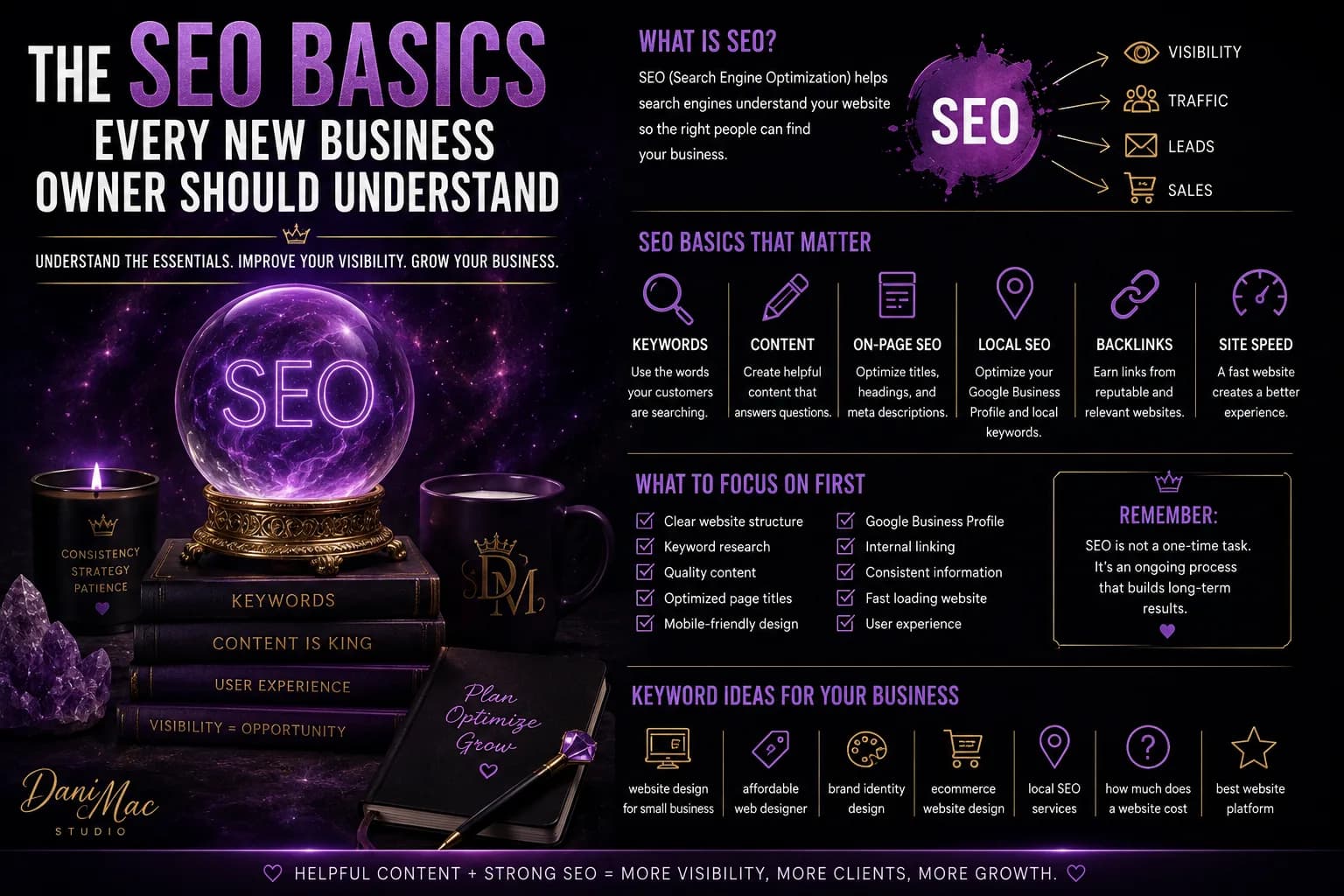
The SEO Basics Every New Business Owner Should Understand
SEO sounds way more complicated than it needs to. This guide breaks down the basics every new business owner should understand so you can make your website easier to find without becoming obsessed with keywords, algorithms, or technical nonsense you do not need yet.
Read article →
What Makes a Website Look Cheap—and How to Fix It
A website does not have to cost thousands to look professional—but a few bad design choices can make even a good business look sketchy, outdated, or thrown together. Here are the biggest things making websites look cheap and the fixes that actually make a difference.
Read article →About Dani Mac
I’m an entrepreneur, designer, digital-product creator, author, and builder of several connected brands. I share what works, what needs testing, and what I would do differently.
Explore my work →