
Marketing
Why Your Business Needs More Than an Instagram or Facebook Page
Social Media Is Useful. It Is Not a Substitute for Owning Your Online Presence.
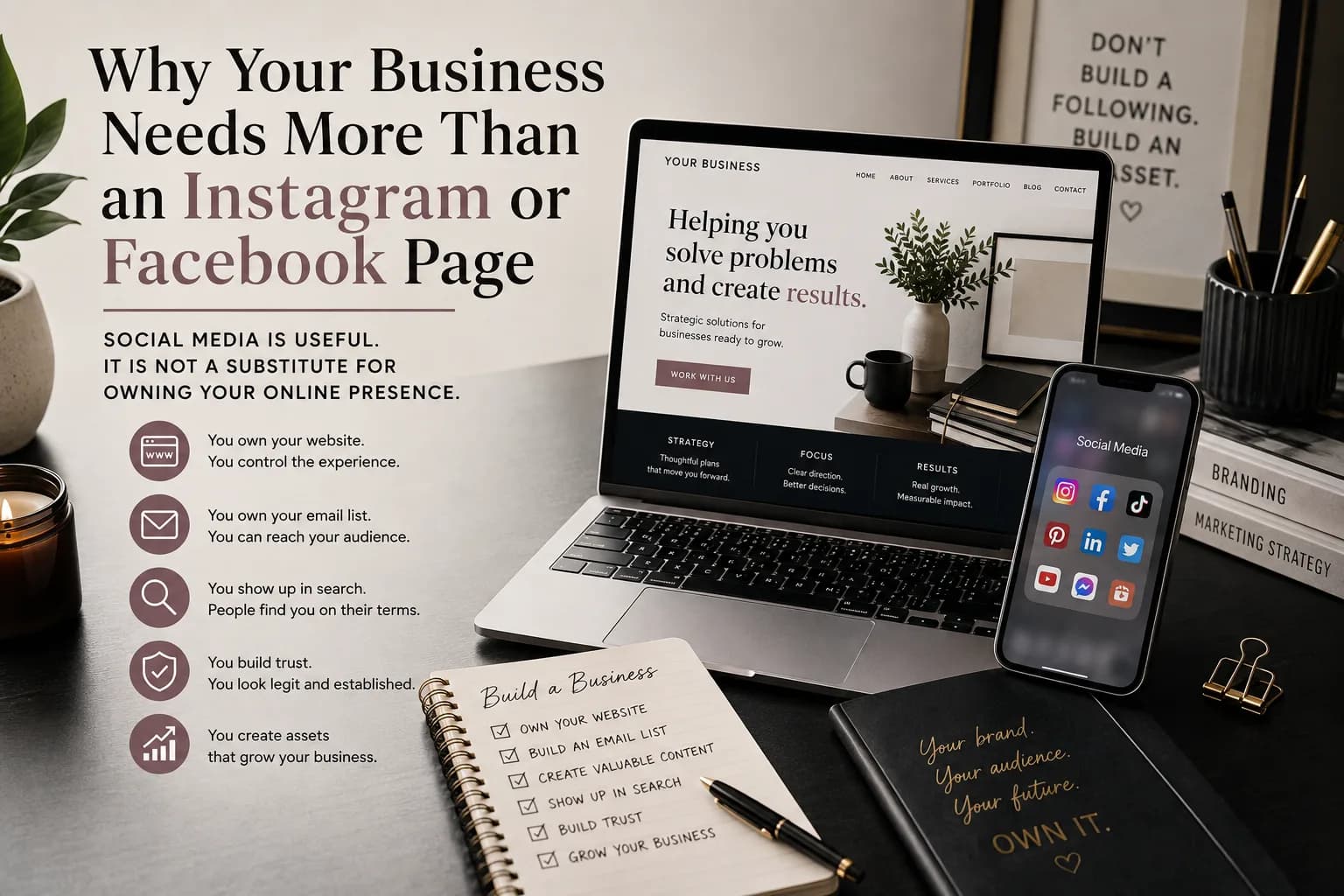
If your entire business lives on Instagram or Facebook, I need you to understand something:
You do not actually control your storefront.
You are renting space inside somebody else’s platform.
That does not mean social media is useless. Far from it. Instagram, Facebook, TikTok, Pinterest, LinkedIn, and other platforms can be incredible for discovery, community, content, and sales.
But they should be part of your business.
They should not be your business.
If your customers can only find you through a social media profile, you are building your entire online presence on land you do not own.
And the landlord can change the rules whenever they feel like it.
Your Facebook or Instagram page is rented space
This is probably the biggest thing small-business owners overlook.
You do not own Instagram.
You do not own Facebook.
You do not control:
- the algorithm
- how many followers see your posts
- which features stay available
- what content gets restricted
- how your profile is displayed
- how people discover you
- what advertising costs
- how the platform handles account disputes
You are allowed to use their platform under their rules.
That is a very different relationship from owning your own website and domain.
If Instagram changes its algorithm tomorrow, you adapt.
If Facebook removes a feature you use, you adapt.
If your account gets mistakenly restricted, you wait for somebody else to decide whether you get access back.
That is way too much control to hand over when your income depends on it.
Your account can disappear
People hear this and think:
“Well, I am not doing anything wrong, so my account is fine.”
I wish the internet worked that neatly.
Accounts get:
- hacked
- flagged
- restricted
- suspended
- locked out
- impersonated
- caught in automated moderation systems
Sometimes there is a legitimate reason.
Sometimes there is not.
Either way, if your business exists only through that account, one problem can suddenly cut you off from your customers.
Imagine waking up tomorrow and losing:
- your storefront
- your portfolio
- your customer contact list
- your reviews
- your marketing channel
- your main way of taking inquiries
all at the same time.
That is essentially what can happen when everything is tied to one social profile.
That is not a marketing strategy.
That is a hostage situation with cute filters.
Your followers are not the same thing as your audience
This one is important.
Having 5,000 followers does not mean you can reach 5,000 people whenever you want.
The platform decides who sees your content.
Some followers may see everything.
Others may not see one of your posts for months.
That means your follower count is useful, but it is not the same thing as having direct access to your audience.
An email list is different.
If someone gives you permission to email them, you can contact them directly instead of hoping an algorithm decides your post deserves to appear between somebody’s cousin’s vacation pictures and a video of a raccoon stealing cat food.
You still need to earn attention.
But at least you are not asking Meta for permission to reach the people who already asked to hear from you.
A website makes you easier to trust
Think about how you behave when you are considering spending real money.
If you find a business on Instagram, there is a good chance you eventually start looking for more information.
You want to know:
- what they actually offer
- how much it costs
- where they are located
- what their process looks like
- whether other customers trust them
- how to contact them
- what their policies are
- whether the business looks legitimate
A social profile can answer some of that.
A good website can answer all of it without making someone scroll through 87 posts looking for the one graphic where you explained your pricing.
A professional website gives your business a permanent home for the information customers actually need.
Dani’s practical check: If someone found your business today and wanted to spend money with you, could they understand what you sell, what it costs or how pricing works, why they should trust you, and what to do next without sending you six DMs?
Social media posts disappear fast
You can spend two hours creating the perfect Instagram post.
You post it.
People like it.
Maybe it gets some comments.
Then two days later it has basically been buried alive.
That is the nature of social content.
It moves fast.
A website works differently.
A useful service page, blog article, FAQ, case study, or product page can continue helping customers long after you publish it.
Instead of constantly feeding a content machine just to stay visible, you are also building assets that stick around.
That is a much better long-term use of your effort.
A website gives Google something to find
If someone already knows your Instagram handle, great.
But what about the people searching for the thing you sell who have never heard of you?
Someone might search:
- web designer in Tucson
- mobile dog groomer near me
- custom birthday cakes
- bookkeeper for freelancers
- house cleaning service in Phoenix
- business credit consultant
A properly built website gives search engines pages and information they can understand and potentially show to those people.
That means your business has another way to get discovered besides hoping somebody shares your Reel.
Social media is excellent for attention.
Search is excellent for intent.
And there is a big difference between someone watching a funny video and someone actively searching for the exact service you provide.
Your website lets you control the customer journey
On Instagram, your customer is surrounded by distractions.
Your competitor is one swipe away.
Their friend just posted something.
There are ads everywhere.
Somebody is fighting in the comments.
A celebrity just announced a divorce.
Good luck keeping their attention.
On your own website, you control what happens next.
You can guide someone from:
“Who is this?”
to:
“Oh, this is exactly what I need.”
to:
“I trust this business.”
to:
“Here is how I buy.”
That can include:
- a strong homepage
- service pages
- pricing
- portfolio examples
- testimonials
- FAQs
- booking
- checkout
- lead capture
- email signup
You are designing an experience instead of hoping people dig through your profile until they find what they need.
Your website can actually work while you are asleep
This is one of my favorite differences between a social profile and a properly built website.
A website can do work without you personally answering every question.
It can:
- collect leads
- take orders
- book appointments
- explain your services
- show your portfolio
- answer common questions
- deliver digital products
- collect email subscribers
- share policies
- send customers toward the correct next step
If your entire sales process currently starts with:
“DM me for info.”
you are creating extra work for yourself and extra friction for the customer.
Some people will DM you.
Others will leave.
Not because they hated your business.
Because they wanted the answer now.
“DM for price” can cost you customers
I know why businesses do this.
Sometimes pricing depends on the project.
Sometimes you want to start a conversation.
Sometimes social media simply became the easiest place to run the business.
But if someone has to contact you just to learn basic information, you have created an unnecessary barrier.
You do not always need exact pricing.
You can say:
- starting at $500
- packages range from $200–$800
- custom quotes available
- monthly plans begin at $75
- pricing depends on square footage
Give people enough information to decide whether continuing makes sense.
You do not need to make customers complete a mystery quest before they are allowed to buy something.
Your domain makes your business easier to remember
Compare:
instagram.com/yourbusinessname_az2026
with:
yourbusiness.com
Your own domain is cleaner.
It is easier to:
- put on a business card
- print on packaging
- say out loud
- include in an advertisement
- add to your email signature
- remember later
It also lets you use a professional email address like:
hello@yourbusiness.com
instead of:
yourbusiness42069@gmail.com
No judgment.
We have all made an email address we later regretted.
But your business deserves better.
Your website can grow with the business
Your Instagram page is going to remain an Instagram page.
Your website can become an actual business system.
You might start with:
- a homepage
- an About page
- services
- contact information
Then later add:
- online booking
- e-commerce
- a customer portal
- digital downloads
- courses
- memberships
- a blog
- affiliate content
- lead magnets
- email automations
- client intake forms
- payment systems
Your website can grow into infrastructure.
Social media is still marketing.
Those are two different jobs.
You need more than one way for customers to find you
I would never recommend depending on one platform for your entire business.
Ideally, customers can find you through several paths.
For example:
Instagram → website → email list → customer
or:
Google search → blog post → service page → booking
or:
Facebook recommendation → website → portfolio → quote request
or:
Pinterest → product page → email signup → later purchase
Now if one channel slows down, the entire business does not disappear with it.
That is what a stronger online ecosystem looks like.
So should you stop using Instagram or Facebook?
Absolutely not.
Use them.
They are valuable.
Post your work.
Talk to customers.
Build community.
Share behind-the-scenes content.
Run ads if they make sense.
Answer comments.
Let people discover you.
But then give them somewhere to go.
The goal should not be:
social media OR a website.
The better system is:
social media AND a website AND an email list.
Each one has a different job.
What a small business actually needs online
You do not need a giant complicated setup.
A strong basic online presence can be surprisingly simple.
1. Your own domain
Something people can remember and your business controls.
2. A professional website
At minimum, explain:
- who you are
- what you offer
- who it is for
- why someone should trust you
- how the process works
- how to take the next step
3. At least one useful social platform
You do not need to be everywhere.
Go where your customers actually are and use it well.
4. An email list
Give interested people a way to stay connected without depending entirely on an algorithm.
5. A clear way to buy, book, or contact you
Make the next step obvious.
Do not hide it.
Do not make people beg for information.
Do not make them send:
“Hey girl, how much?”
under a picture from seven months ago.
What if I cannot afford a custom website yet?
Then do not let anybody convince you that you need to spend thousands of dollars tomorrow.
Get the foundation in place first.
Buy your domain.
Build a simple site with:
- a strong homepage
- your services or products
- basic information about the business
- contact or booking
- your policies if they apply
Keep it clean.
Make it mobile-friendly.
Use good photos.
Write clear copy.
Make sure every button works.
Then improve it as the business grows.
A small professional website is better than a giant unfinished one.
Frequently asked questions
Is a Facebook business page enough for a small business?
It can be enough to start getting customers, especially for very small local businesses.
But it is not a strong long-term foundation because you do not control the platform, the algorithm, or access to your audience.
Use Facebook as one channel, not your entire online presence.
Do I really need a website if most of my customers come from Instagram?
Yes, especially if Instagram is already working for you.
Your website gives those interested people somewhere to learn more, build trust, compare services, view your work, join your email list, or purchase without depending on a DM conversation.
Instagram can bring people in.
Your website can help convert them.
What should I build first: a website or social media?
If you are starting from zero, I would secure your domain immediately and build a simple professional website while establishing one social channel where your customers spend time.
You do not need to finish one before touching the other.
They should support each other.
Do I need to post on every social platform?
No.
Please do not create seven accounts you are going to abandon by next Tuesday.
Pick the platforms that make sense for your audience, product, skills, and available time.
A strong presence on one or two platforms is usually more useful than a weak presence everywhere.
The bottom line
Your Instagram followers matter.
Your Facebook page matters.
Your social content matters.
But none of those things should be the only thing standing between your business and disappearing from the internet.
Build your social audience.
Then move some of that attention toward assets you control.
Your website.
Your domain.
Your email list.
Your customer relationships.
Social media should help grow your business.
It should not own your business.
Ready to build something you actually own?
If your business has been surviving on a Facebook page, an Instagram bio, and a prayer, it might be time to give it a real home online.
At Dani Mac Studio, I build custom websites and website glow-ups for small businesses that are ready to look established, professional, and a whole lot harder to ignore.
Keep building with intention.
Explore the practical tools, services, and systems across the Dani Mac ecosystem when you need the next layer of support.
Explore resources →Related reading
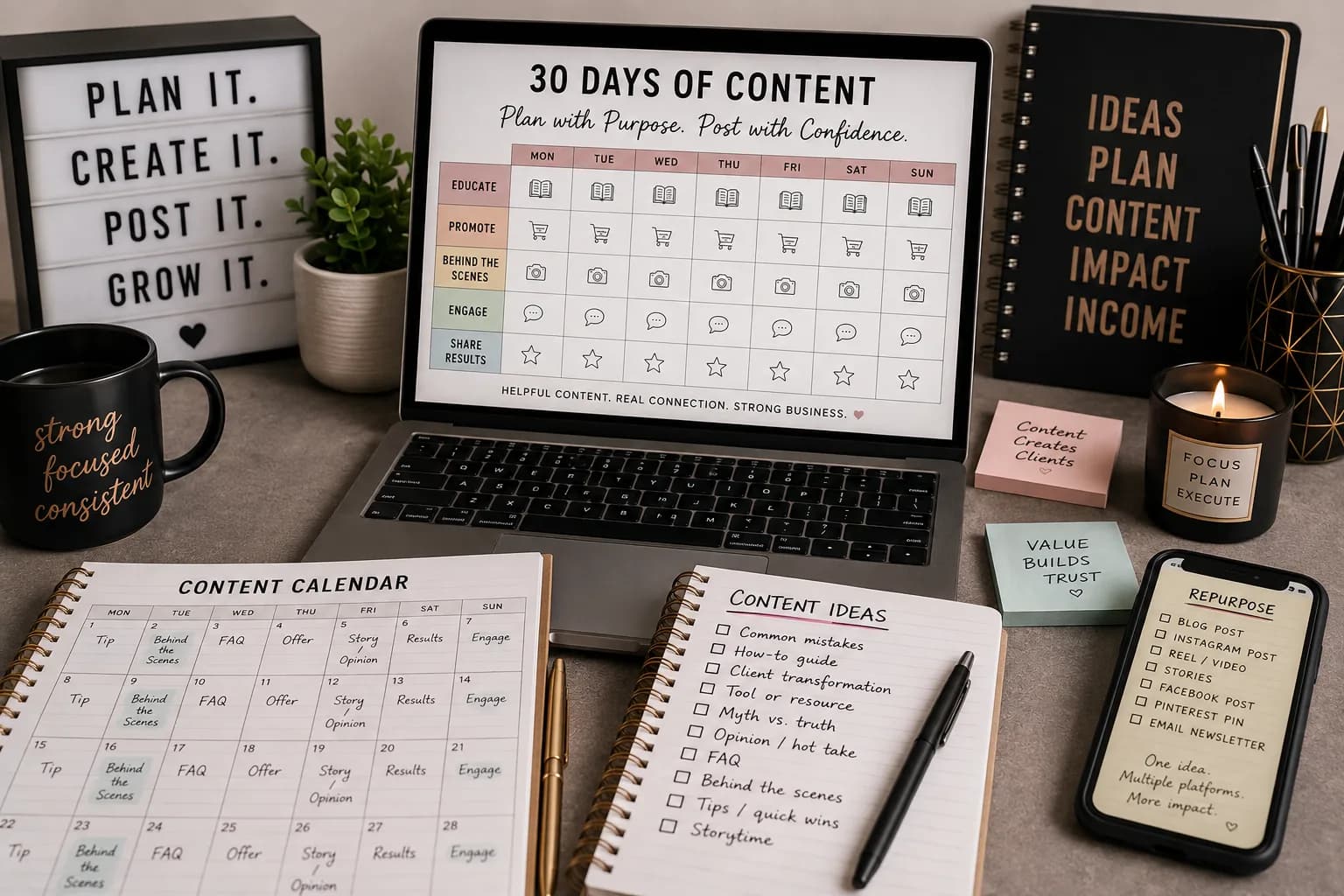
How to Plan 30 Days of Business Content Without Losing Your Mind
Planning a month of content does not have to mean spending three miserable days making 90 posts. This guide shows you how to build 30 days of useful business content from a few strong ideas, repeatable content pillars, and one realistic system you can actually keep up with.
Read article →About Dani Mac
I’m an entrepreneur, designer, digital-product creator, author, and builder of several connected brands. I share what works, what needs testing, and what I would do differently.
Explore my work →